
Contact Us
Schedule an appointment.

Schedule an appointment.
Keep up with the latest on pest control news, the industry, Metro Exterminating updates, and much more.
A new exotic invasive pest ant species was found around Houston (Harris County), Texas in 2002, and has begun to spread with human assistance. The ant has yet to be identified to species and is commonly referred to as the Rasberry crazy ant, Nylanderia sp. nr. pubens (LaPolla, et al). Currently, little is known regarding the biology of this ant. The Center for Urban and Structural Entomology at Texas A&M University is investigating food source attraction, colony growth and immature development. However, research regarding other ant species in the genus, Nylanderia, is available and may offer close approximations for this species.
How Do I Spot Them?
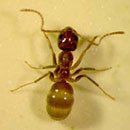
Suspect Rasberry crazy ants if you see a lot of ants with the following characteristics:
The crazy ant, P. longicornis, may in some cases create massive, but localized numbers. These species look similar, but have marked differences. Paratrechina longicornis antennae and legs are significantly longer than that of N. sp. nr. pubens. Paratrechina longicornis thorax is extended in length considerably, compared to that of the Nylanderia species. Although the use of color as an identification tool is not to be relied upon, the crazy ant is often jet black in color, especially when compared to the typically reddish-brown of N. sp. nr. pubens.
What Do They Do?
In infested areas around the Houston area, large numbers of Rasberry crazy ants have caused great annoyance to residents and businesses. In some situations, it has become uncomfortable for residents to enjoy time in their yards. Companion animals may, in some cases, avoid the outdoors as well, and wildlife such as nesting songbirds, can be affected. The economic impact is currently unknown.
Rasberry crazy ants do not have stingers. In place of a stinger, worker ants possess an acidopore on the end of the abdomen, which can excrete chemicals for defense or attack. They are capable of biting, and when bitten, they cause a relatively sharp pain that quickly fades.
Electrical equipment: In areas infested by the Rasberry crazy ant, large numbers of ants have accumulated in electrical equipment, causing short circuits and clogging switching mechanisms causing equipment failure. In some cases the ants have caused several thousand dollars in damage and remedial costs.
Agriculture: Todd Staples, Commissioner of Agriculture, suspects this to be a potentially serious agricultural pest. These ants show likelihood of being transported through movement of almost any infested container or material.Thus, movement of garbage (See image B below), yard debris (See image A below),bags or loads of compost, potted plants, bales of hay, can transport these ant colonies by truck, railroad, and airplane. No information is available on potential yield effects in infested lands.
What Affect Do They Have on Wildlife?
Wildlife such as nesting songbirds is irritated by the Rasberry crazy ants. Masses of crazy ants covering the ground and trees likely affect ground and tree-nesting birds and other small animals and cause wildlife to move out of the area. The ants are even displacing red imported fire ants in areas of heavy infestation. However, after experiencing the Rasberry crazy ant, most residents prefer the fire ant.
A related species of crazy ant has been a serious pest in South America, reportedly displacing all other ant species. In addition, the South American crazy ant pest caused chickens to die of asphyxia due to ants obstructing their nasal passages. Larger animals, such as cattle, have been attacked around the eyes, nasal area and hooves.
Where Are They Found?
The Rasberry crazy ant has only been known in the state of Texas (near Pasadena) since 2002. High numbers of the ants have been found in localized spot infestations in southeast Houston (Harris County), including Houston, Pasadena, Deer Park, Friendswood, San Jacinto Port, Pearland, Seabrook and La Porte.
Localized infestations have also been confirmed from areas in Bexar, Brazoria, Fort Bend, Chambers, Galveston, Hardin, Harris, Hidalgo, Jefferson, Jim Hogg, Liberty, Montgomery, Orange, Walker and Wharton counties. New infestations are suspected beyond these areas of infestation. However, sample identifications have not been confirmed. This ant has the potential to spread well beyond the current range in coastal Texas. However, it is a semi-tropical ant and potential northern distribution will be limited by cooler weather conditions.